Ford Recalled Millions of Vehicles This Month — Here's What It Means for Your Family
Ford issued multiple recalls in March 2026 affecting more than 6 million vehicles total. One model — the 2025 Ford Transit — is under a "Do Not Drive" order from NHTSA.
If you drive a Ford, there is a good chance your vehicle showed up in the news this month. Ford issued a wave of recalls in March 2026 covering everything from backup cameras to brake pedals, and the total number of affected vehicles is staggering: more than six million across multiple models and model years. That is a lot of families.
We know that most recall headlines are written for car enthusiasts and gearheads, not for parents trying to figure out whether they need to do something right now. So we are going to walk through each of these Ford recalls in plain language, explain what the risks are for your family, and help you understand what it all means for your children's safety — both inside and around the vehicle.
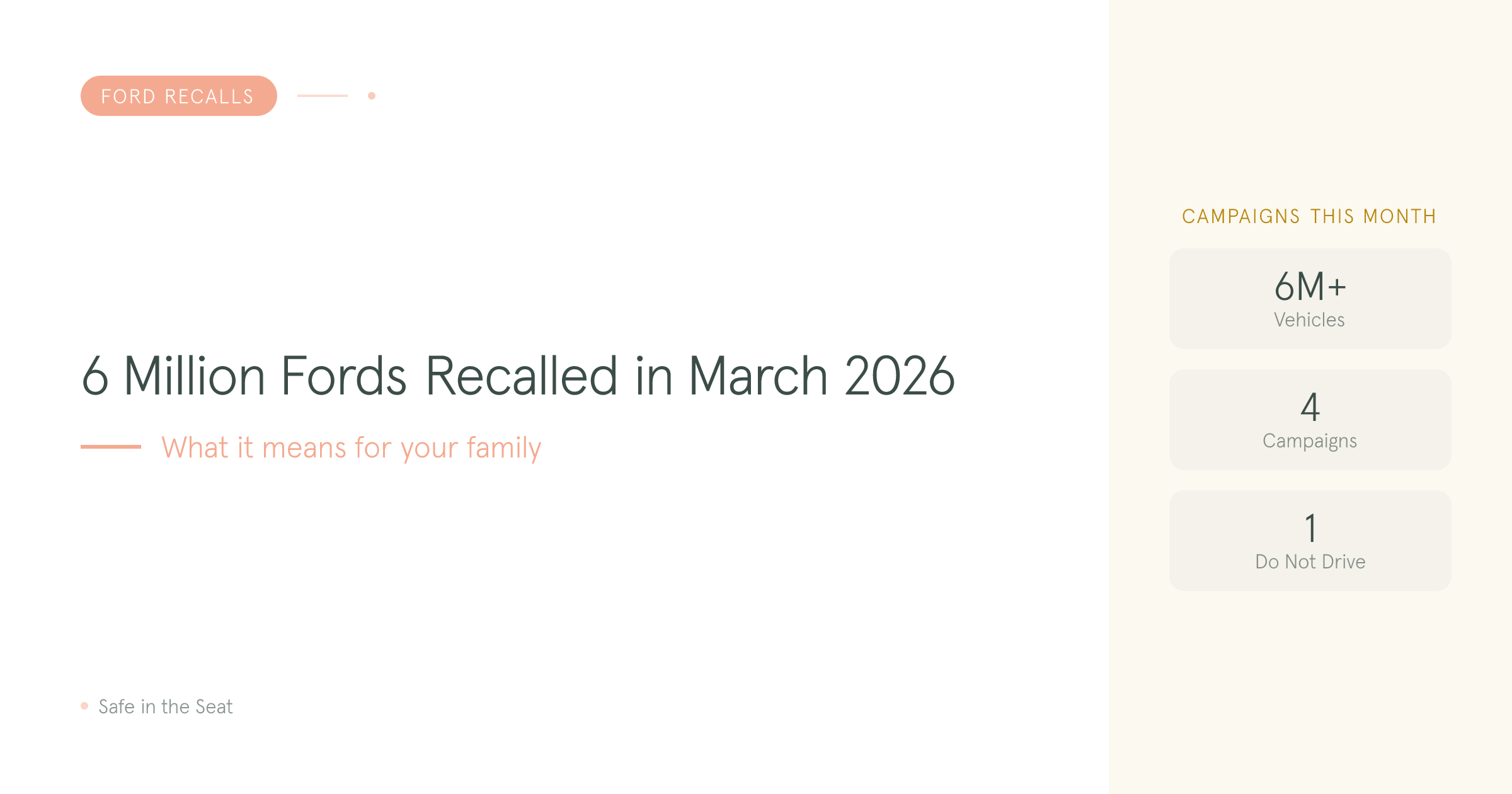
More than 6 million Ford vehicles are affected by recalls issued in March 2026.
Rearview Camera Failures — 1.74 Million Vehicles
We are leading with this recall because it has the most immediate child safety implications. Approximately 1.74 million Ford and Lincoln vehicles are affected by a defect that can cause the rearview camera to go completely blank or to display an inverted image when you shift into reverse. The vehicles involved span several of the most popular family models on the road today.
Key Facts
- Affected vehicles: 2021-2026 Ford Bronco, 2021-2024 Ford Edge, 2020-2026 Ford Escape, 2020-2026 Ford Explorer, 2020-2026 Lincoln Corsair, 2020-2026 Lincoln Aviator
- The defect: The Accessory Protocol Interface Module (APIM) may overheat, causing the backup camera display to go blank or show an inverted image
- Estimated vehicles affected: Approximately 1.74 million
Here is why this matters so much for families. Backover incidents are one of the most devastating and preventable causes of child injury and death in driveways and parking lots. According to NHTSA, hundreds of children are injured and dozens are killed each year in backover crashes, and the vast majority of victims are children under five years old. Rearview cameras became mandatory on all new vehicles starting in 2018 specifically because they save lives.
When that camera goes blank or shows you a flipped image, you lose the single most important tool you have for seeing a small child behind your vehicle. Children under five are especially vulnerable because they are short enough to be completely invisible in your side mirrors and rearview mirror. If you have ever backed out of your driveway while your kids played nearby, you understand why a working backup camera is not a convenience feature. It is a safety essential.
The APIM overheating issue can happen without warning. You shift into reverse, glance at your screen expecting to see a clear view of what is behind you, and instead you see nothing or a confusing upside-down image. In a split second, that gap in information could mean the difference between stopping in time and not. This is especially dangerous in busy parking lots, school pickup lines, and your own driveway where children might be playing out of sight.
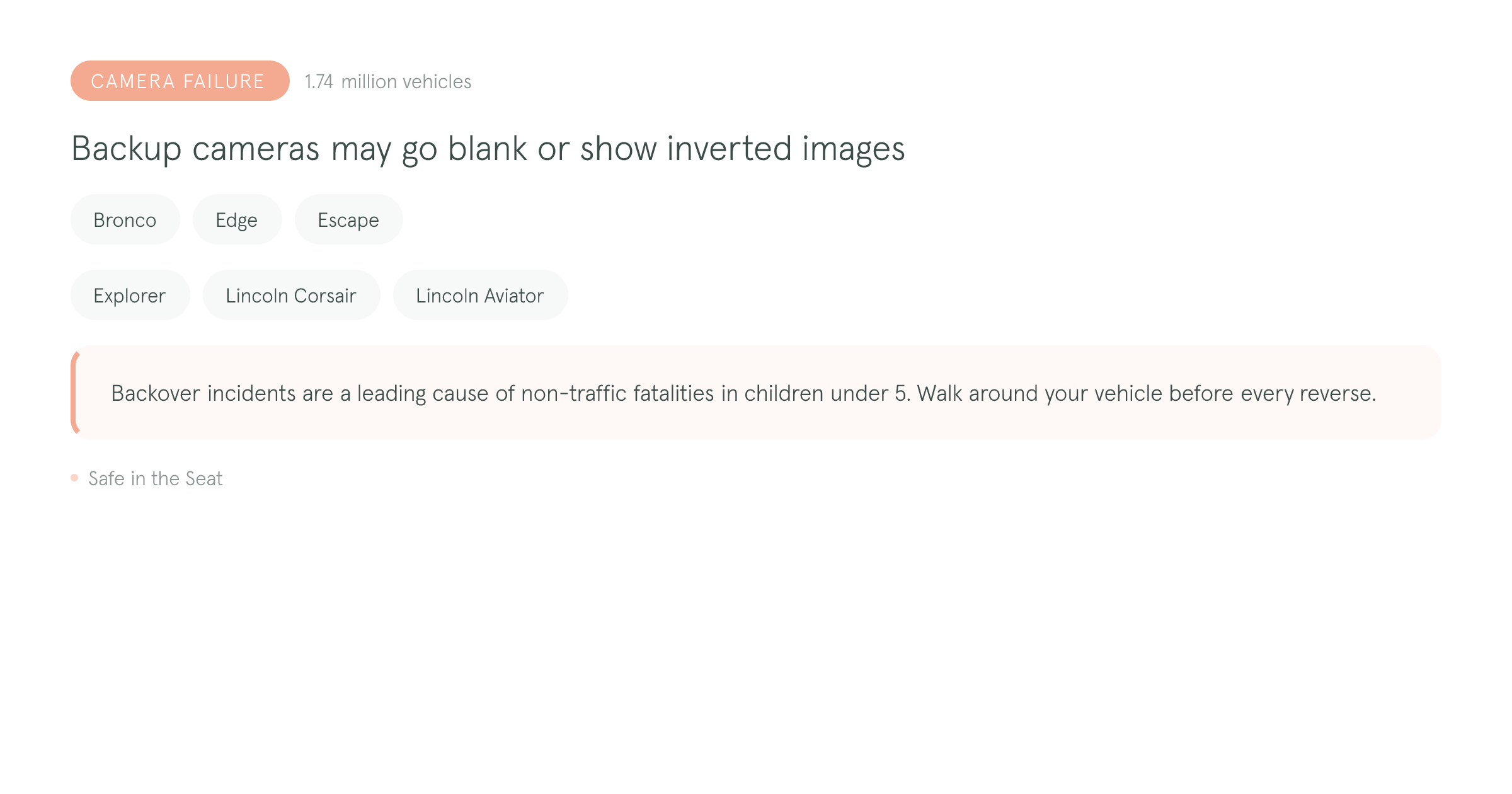
The APIM may overheat, causing the backup camera to go blank or display an inverted image when you reverse.
What to do if you own one of these vehicles:
- Build the walk-around habit today. Before you get in your vehicle, walk all the way around it. Check behind the rear bumper, along both sides, and under the vehicle. Do this every single time, even when the camera is working. Most backover incidents happen at home, in places that feel safe and familiar.
- Test your camera each time you reverse. If the display is blank, frozen, or the image looks inverted, do not back up until you have visually confirmed nothing is behind you.
- Contact your Ford dealer to schedule the recall repair. Ask to be notified the moment parts are available if the fix is not yet ready.
Trailer Brake and Lighting Failure — 4.38 Million Vehicles
This is the largest recall in the March batch by number of vehicles, and it is one that many parents might initially skip past because it involves towing. But stay with us here, because if your family owns an F-150, Super Duty, Maverick, Ranger, Expedition, or Navigator, this affects your vehicle whether you tow or not.
Key Facts
- Affected vehicles: 2021-2026 Ford F-150, 2022-2026 Ford F-250/F-350/F-450/F-550 Super Duty, 2022-2026 Ford Maverick, 2024-2026 Ford Ranger, 2022-2027 Ford Expedition, 2022-2027 Lincoln Navigator
- The defect: The Integrated Trailer Module may lose communication while towing, causing trailer brakes and trailer lights to stop functioning
- Estimated vehicles affected: Approximately 4.38 million
When a trailer's brakes stop working mid-drive, the vehicle doing the towing suddenly has to do all the stopping for both itself and whatever it is pulling behind it. That means significantly longer stopping distances and much greater force during any sudden stop or collision. If your kids are buckled into car seats in the back of an F-150 or Expedition that is hauling a camper, boat, or utility trailer, a longer stopping distance translates directly into more force hitting those car seats in an emergency.
Car seats are engineered to absorb and distribute crash forces, and they do that job well within expected parameters. But adding thousands of pounds of unbraked trailer pushing from behind changes the physics of a crash in ways that matter. The energy has to go somewhere, and some of it ends up in the vehicle cabin where your children are riding. This is especially relevant for families who tow during summer road trips, camping weekends, or when hauling sports equipment and hobby trailers.
The trailer lighting failure is a separate but related concern. If the trailer's brake lights and turn signals go dark, drivers behind you cannot see when you are slowing down or turning. That makes rear-end collisions more likely, and a rear-end collision while towing is exactly the scenario where those extra forces are most dangerous for the car seats in your back seat.
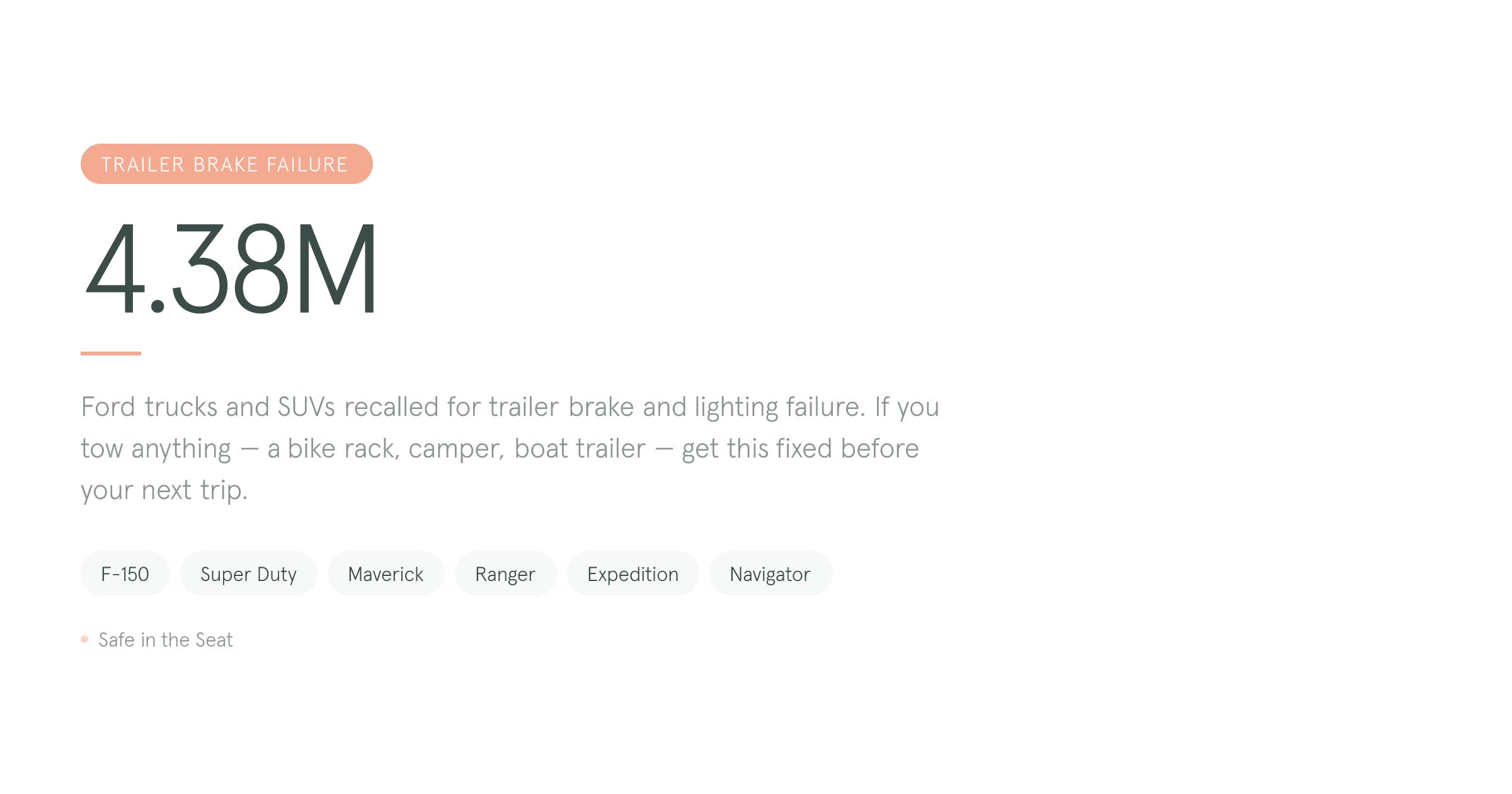
The Integrated Trailer Module may lose communication, disabling trailer brakes and lights while towing.
If you actively tow with an affected vehicle, we strongly recommend avoiding towing until the recall repair is completed. If you must tow before then, reduce your speed, increase your following distance significantly, and avoid situations where sudden braking might be necessary. And if you do not tow at all, you still want to get this fix applied — the software update addresses the trailer module communication system, and keeping your vehicle's systems up to date is always the right call.
Ford Transit "Do Not Drive" Order — 16,000 Vehicles
This recall is smaller in number but far more urgent in severity. NHTSA has issued a rare "Do Not Drive" advisory for approximately 16,000 model-year 2025 Ford Transit vans. That means exactly what it sounds like: if you own or operate one of these vehicles, you should not drive it at all until the recall repair has been completed.
NHTSA has issued a "Do Not Drive" notice for affected 2025 Ford Transit vans. If you own one, park it immediately and contact your Ford dealer.
Key Facts
- Affected vehicle: 2025 Ford Transit
- The defect: The brake pedal may disconnect from the brake booster, resulting in a complete loss of braking ability
- NHTSA advisory: "Do Not Drive" — vehicle should not be operated until the recall repair is performed
- Estimated vehicles affected: Approximately 16,000
A brake pedal that disconnects from the brake booster means you press the pedal and nothing happens. There is no partial function, no gradual loss of pressure, no warning light that gives you time to pull over. It is a sudden and complete loss of your primary braking system.
You might be wondering why a commercial van recall belongs in a car seat safety conversation. Here is why: Ford Transits are one of the most widely used vehicles in childcare transportation across the country. Daycare centers, church groups, school shuttle services, summer camps, and after-school programs rely on Transit vans to transport children every single day. If your child rides in any kind of shuttle or transport van, there is a reasonable chance it is a Ford Transit.
This is a conversation worth having directly and soon. Call your daycare provider. Ask your church group coordinator. Check with the shuttle service your kids use. The question is simple: "Do you operate any 2025 Ford Transits, and if so, have they been checked for the brake recall?" A two-minute phone call could make a real difference for your child's safety.
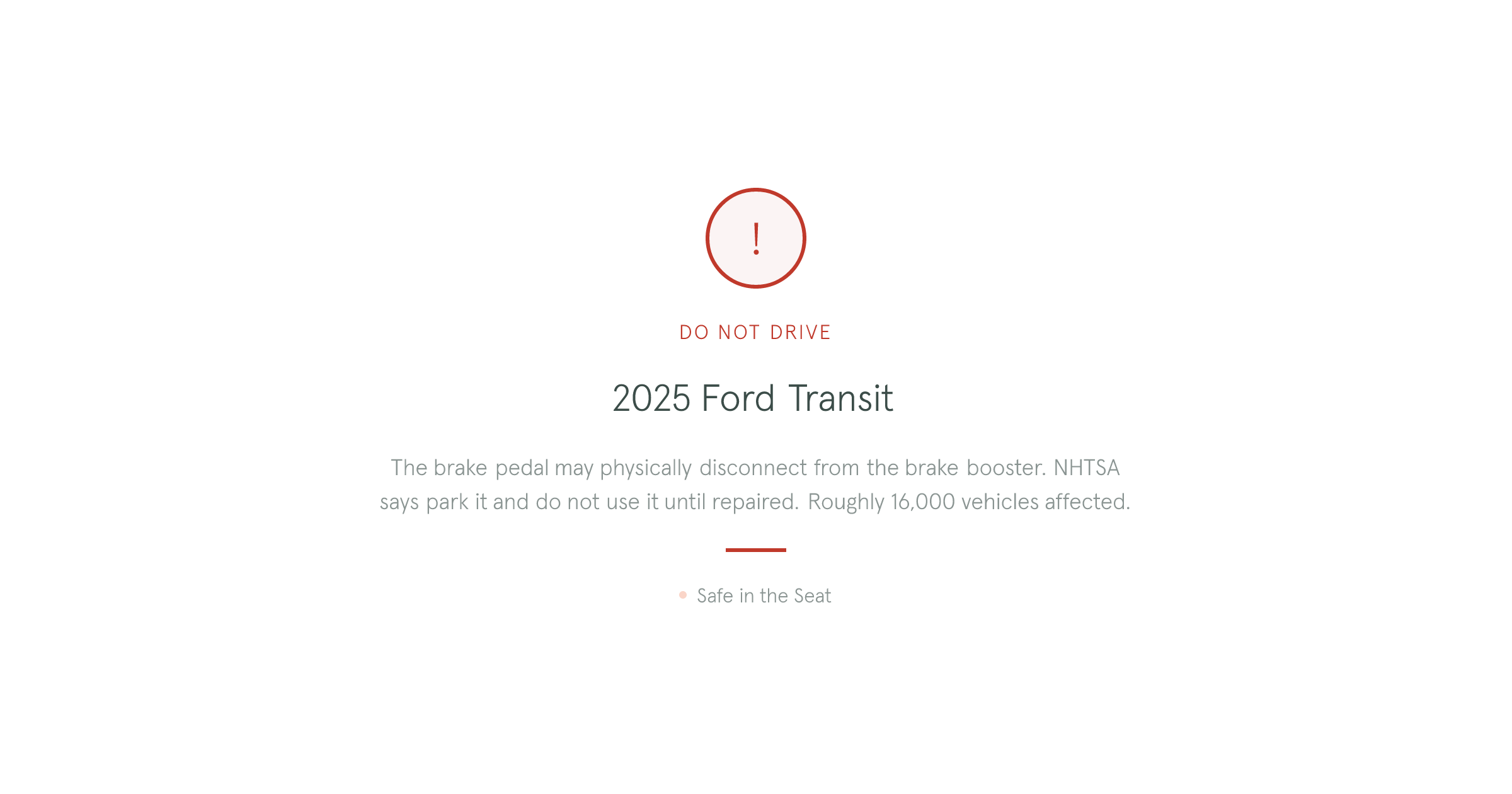
NHTSA's "Do Not Drive" order means these 2025 Transit vans should be parked until the brake repair is complete.
Ford Maverick Moonroof Detachment
The final recall in this month's Ford batch involves the 2025-2026 Ford Maverick. On certain vehicles equipped with a panoramic moonroof, the glass panel may detach from the roof of the vehicle while driving. We are talking about a large piece of glass separating from the vehicle at speed.
Key Facts
- Affected vehicles: 2025-2026 Ford Maverick (equipped with panoramic moonroof)
- The defect: The moonroof glass panel may detach from the vehicle while driving
- Remedy timeline: Fix expected to be available in April 2026
A detached moonroof creates two immediate dangers. First, the occupants of the vehicle are suddenly exposed — wind, rain, road debris, and other objects can enter the cabin without warning. For families with children in rear-facing or forward-facing car seats, a sudden breach in the roof overhead is a serious hazard. Second, the glass panel becomes a large projectile on the roadway that could strike vehicles behind you, potentially causing a chain-reaction crash.
If you drive a 2025 or 2026 Maverick with a panoramic moonroof, contact your Ford dealer now and ask to be notified as soon as the fix is available. Ford expects the repair to roll out in April 2026. In the meantime, be aware of the risk and consider avoiding highway speeds when possible until the repair has been completed.
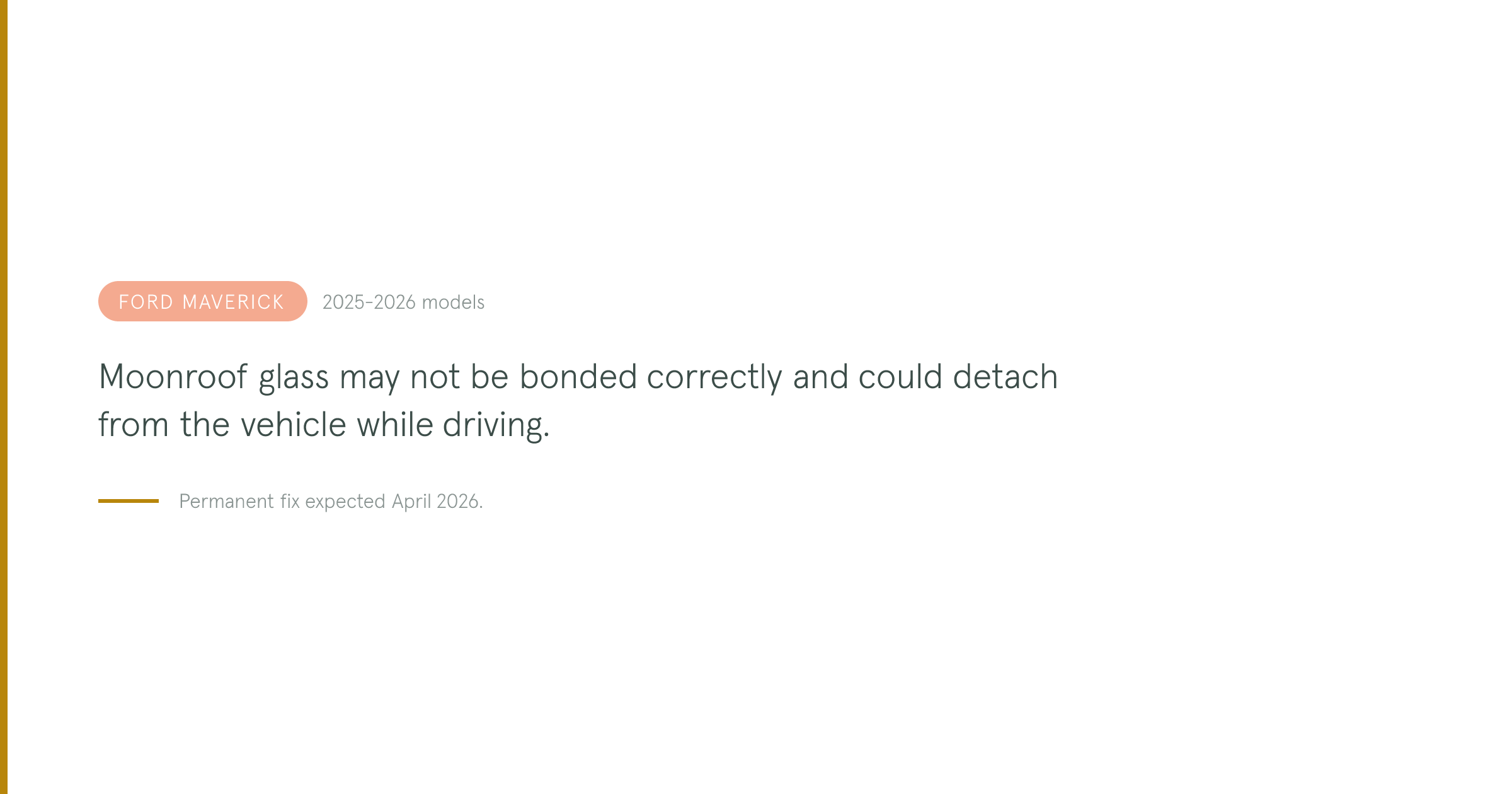
The panoramic moonroof glass on affected Mavericks may detach while driving. A fix is expected in April 2026.
How to Check If Your Ford Is Affected
Checking whether your specific vehicle is part of any of these recalls is fast, free, and something you can do right now from your phone. You have two options, and we recommend using both for the most complete picture.
Option 1: NHTSA VIN Lookup
Go to nhtsa.gov/recalls and enter your 17-digit Vehicle Identification Number (VIN). You will find your VIN on your registration card, your insurance documents, or on the small metal plate visible through the lower-left corner of your windshield. NHTSA will show you every open recall for your specific vehicle — not just these Ford recalls but any recall from any manufacturer.
Option 2: Ford's Recall Page
Go to ford.com/support/recalls and enter your VIN. Ford's tool will show you recall status, let you know whether parts and repairs are available yet, and allow you to schedule a dealer appointment directly from the page. Ford's system is sometimes updated faster than the NHTSA database for Ford-specific recalls.
Check every Ford in your household. If you have two Ford vehicles, check both. If your parents, your babysitter, or your carpool partner drives a Ford and ever transports your children, send them this article and ask them to check their VIN too. It takes less than two minutes per vehicle and the information could be genuinely life-saving.
We recommend making VIN checks a habit at least twice a year. Recalls are issued throughout the year and they do not always make the evening news. Set a reminder on your phone for January and July if that helps. Two minutes, twice a year, every vehicle that carries your kids.
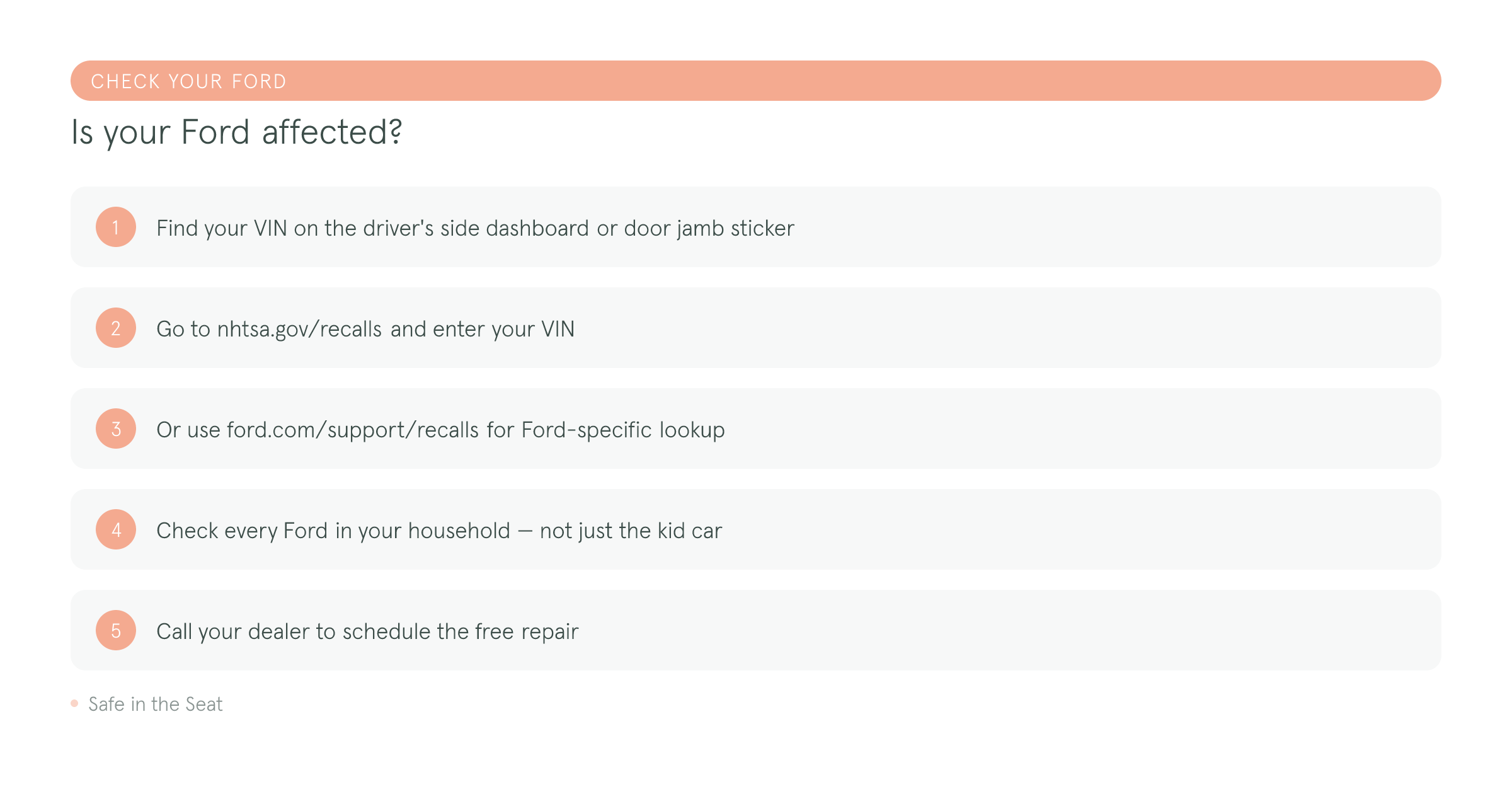
Check your VIN at nhtsa.gov/recalls and ford.com/support/recalls for the most complete picture.
Safe in the Seat's Take — The Car Seat Is Not the Whole Picture
We spend most of our time helping you choose the right car seat, install it correctly, and make sure your child's harness fits the way it should. That work matters enormously and we will never stop doing it. But recalls like these are an important reminder that the car seat does not exist in a vacuum. It lives inside a vehicle, and that vehicle's safety systems play a critical role in protecting your child every time you drive.
We want to be clear: none of these Ford recalls directly affect LATCH anchors, car seat tether anchors, or the structural integrity of your child's car seat installation. Your car seat is still doing its job the way it was designed to. But here is what we want you to think about: a car seat protects your child during a crash. The vehicle safety systems covered by these recalls help determine whether a crash happens in the first place and how severe it is when it does.
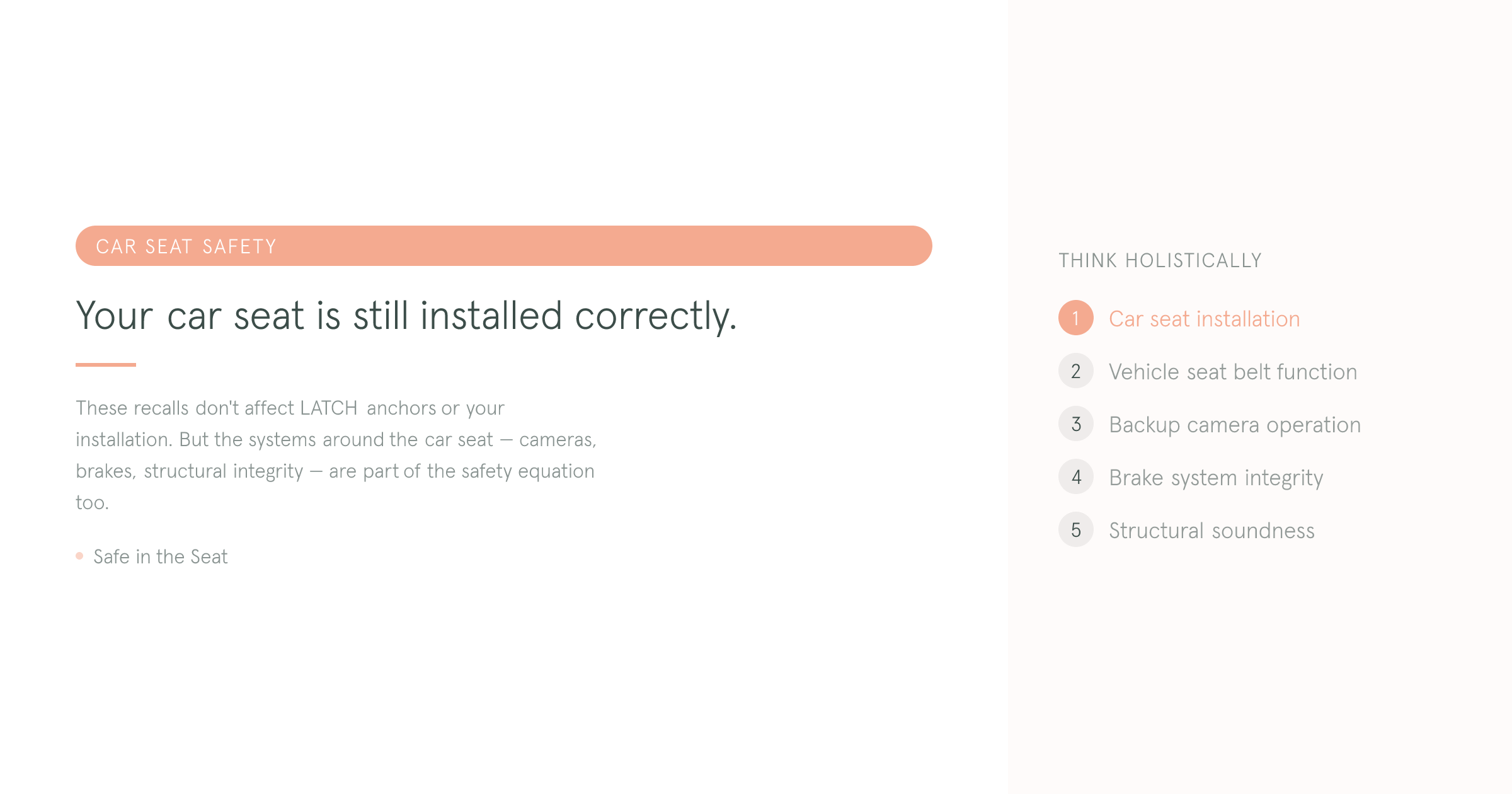
Your car seat does its job during a crash. Vehicle safety systems help prevent the crash from happening.
A backup camera that goes blank means you lose your best tool for preventing a backover tragedy in the driveway. A trailer brake system that cuts out means higher forces reaching your child's car seat in a sudden stop. A brake pedal that disconnects means no ability to stop at all. A moonroof that detaches means a cabin breach that puts everyone inside at risk.
Thinking holistically about your child's safety means thinking beyond the car seat. It means staying on top of vehicle recalls, making sure your vehicle's safety systems are working as designed, and building habits like walk-around checks and VIN lookups into your regular routine. The car seat is the last line of defense. Everything we can do to make sure it never has to do its job is time well spent.
Think holistically. The car seat is the last line of defense — keep everything around it working too.
Need More Help?
If you have questions about how a recall impacts your car seat setup, email us at hello@safeintheseat.com. Our certified CPSTs are here to help.
Get 1:1 HelpSources
- NHTSA Recall Database — Ford Rearview Camera Campaigns (nhtsa.gov/recalls)
- BizzyCar — "March 2026 Ford Recall Alert: 4.3M+ Vehicles" (March 2026)
- NHTSA — Ford Transit "Do Not Drive" Advisory (March 2026)
- NHTSA — Backover Incident Statistics
- Ford Motor Company — Official Recall Notices (ford.com/support/recalls)